Tell us about the job
Takes about a minute. No obligation.
Sizing a central AC system in Hocking County starts with what the house actually demands, and that calculation depends more on installation variables than on weather load. 78 severe weather events were recorded in Hocking County, Ohio between 2015 and 2024. At roughly that rate, severe weather is a periodic fact of life here, not a constant pressure the equipment fights every season. A contractor setting duct layout, equipment capacity, and refrigerant charge for a home here is working from room volume, insulation, and sun exposure. Those are the variables that produce an undersized or oversized system, and getting them wrong costs a homeowner in runtime and early wear long before storm history enters the picture.
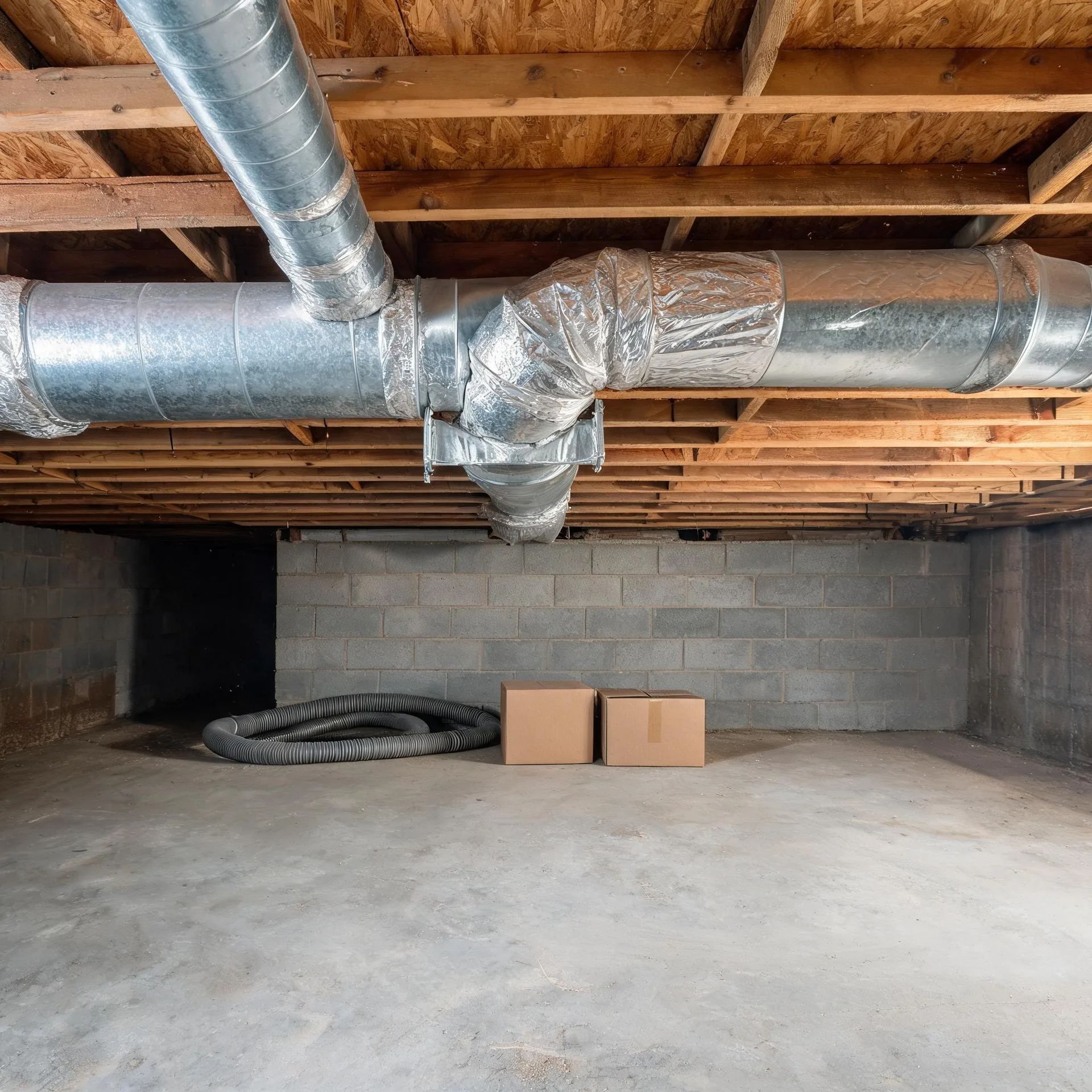
Ductwork laid down for an earlier generation of equipment carries assumptions about airflow and load that a new central AC system may not share. Half the homes in Hocking County, Ohio were built in 1981 or earlier (2020-2024 ACS 5-year). A contractor quoting an installation here opens the existing trunk lines and branch runs before settling on equipment, because the duct layout decides whether the new system can deliver to every room or whether sections need to be rerun. The electrical service gets the same look. What the house already has either fits what a modern unit draws or it does not, and that answer changes the scope and the price of the job before any equipment is ever ordered.
What a Central AC System Includes
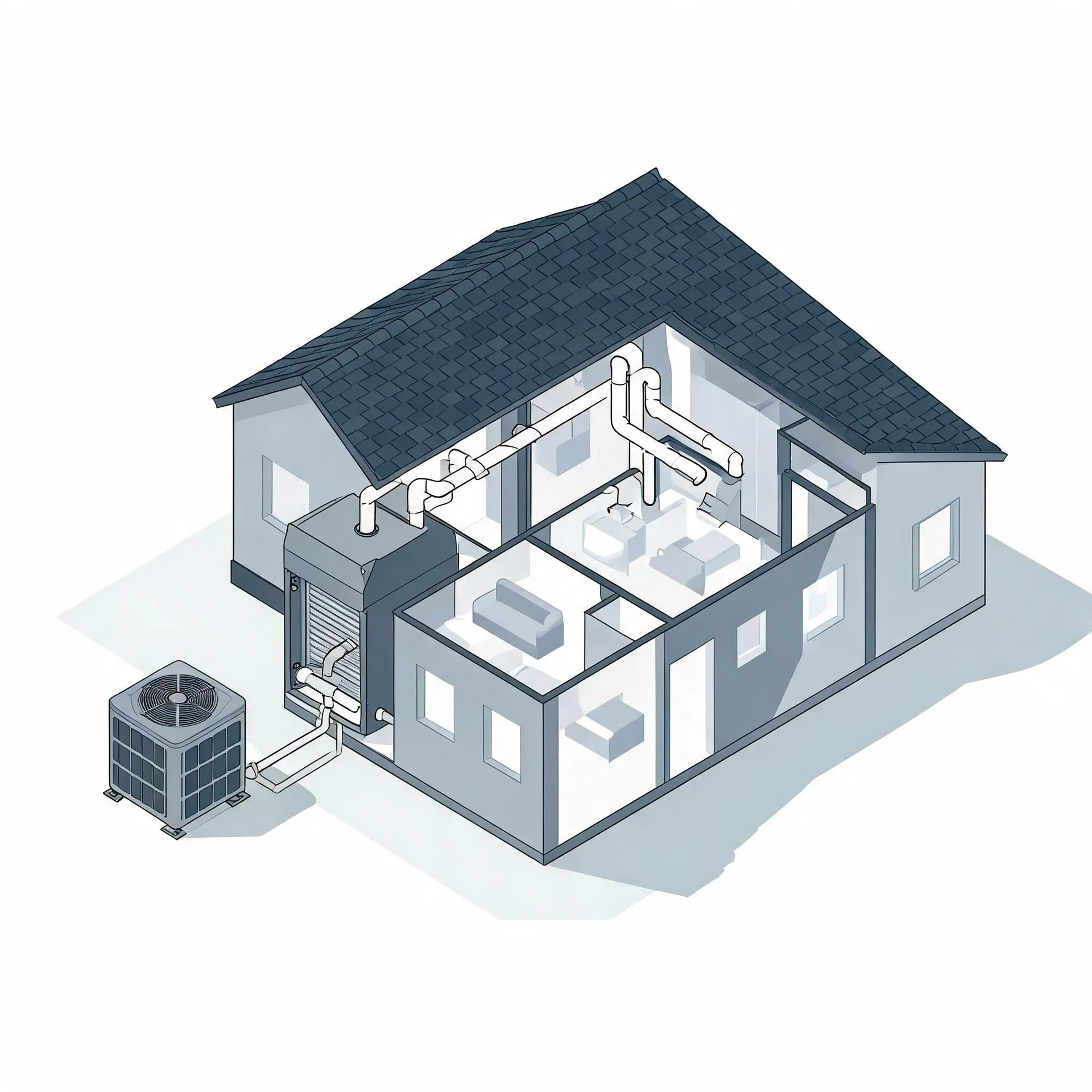
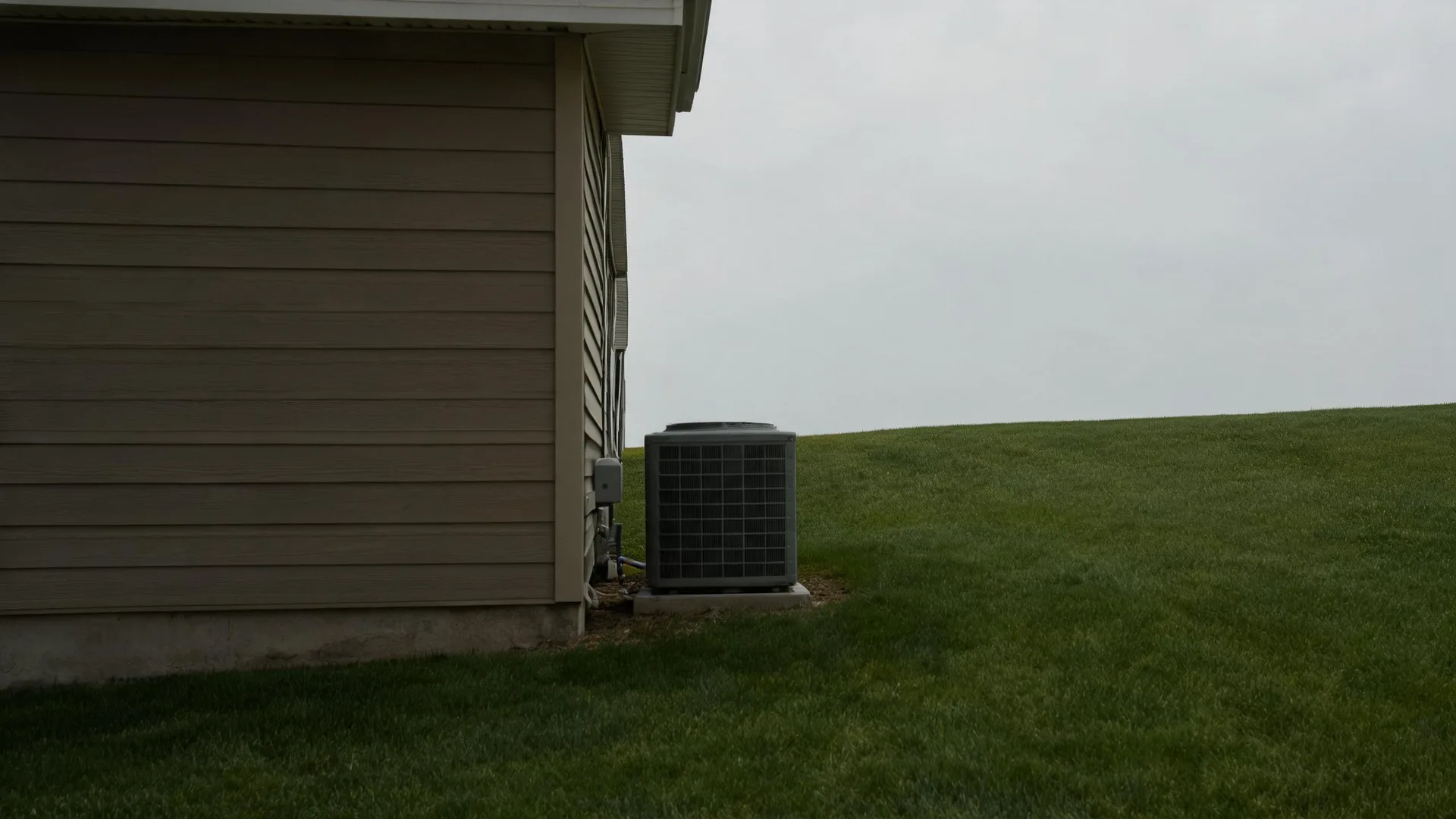
The outdoor condenser unit sits on a concrete pad beside the house and holds the compressor and condenser coil, which together shed heat pulled from inside. The indoor air handler or furnace-mounted evaporator coil lives in a mechanical room, basement, or closet and is the piece that actually cools the air moving past it.
The refrigerant line set runs between those two units, typically through a wall or floor, and carries the working fluid back and forth. A thermostat on an interior wall ties the whole system together, reading the house temperature and telling the equipment when to run.
The drawing beside this text shows how those pieces relate in a standard layout, and a licensed contractor will determine exactly how the configuration applies to your home.
Get matched in Hocking CountyHocking County, by the numbers
78 severe weather events were recorded in Hocking County, Ohio between 2015 and 2024.
NOAA National Centers for Environmental Information, Storm Events Database, bulk CSV export, events 2015-01-01 through 2024-12-31.Half the homes in Hocking County, Ohio were built in 1981 or earlier (2020-2024 ACS 5-year).
U.S. Census Bureau, 2020-2024 American Community Survey 5-Year EstimatesHocking County, Ohio holds 13,013 housing units (2020-2024 ACS 5-year).
U.S. Census Bureau, 2020-2024 American Community Survey 5-Year EstimatesOwners occupy 78.8% of the occupied homes in Hocking County, Ohio (2020-2024 ACS 5-year).
U.S. Census Bureau, 2020-2024 American Community Survey 5-Year EstimatesRules & Standards Behind Central AC Installation in Hocking County, Ohio22 sourced rules and standards
What happens on installation day in Hocking County
Split-system central air conditioners rated below 45,000 Btu/h manufactured on or after January 1, 2023 must meet a federal minimum of 13.4 SEER2.
Split-system central air conditioners rated at or above 45,000 Btu/h manufactured on or after January 1, 2023 must meet a federal minimum of 13.4 SEER2.
Split-system central air conditioners manufactured between January 1, 2015 and December 31, 2022 had to meet 13 SEER, the metric that preceded SEER2.
Single-package central air conditioners manufactured on or after January 1, 2023 must meet a federal minimum of 13.4 SEER2.
Space-constrained central air conditioners manufactured on or after January 1, 2023 must meet a federal minimum of 11.7 SEER2.
Federal efficiency standards for split-system central air conditioners and heat pumps are set on each certified combination of outdoor unit and indoor coil rather than on the outdoor unit alone.
Residential and light commercial air conditioning and heat pump systems assembled in the field, including mini-splits and unitary systems, may not be installed on or after January 1, 2025 using a refrigerant with a global warming potential above 700.
A field-assembled system whose specified components were all manufactured or imported before January 1, 2025 carries no installation compliance date under the refrigerant restrictions and may still be installed.
Licensing and Legal Requirements in Hocking County, Ohio
An Ohio home construction services contract must include a copy of the supplier's certificate of insurance showing general liability coverage of not less than two hundred fifty thousand dollars.
In Ohio a home construction service means the construction of a residential building, including the repair, improvement, remodel or renovation of an existing structure, and does not include construction on a structure containing four or more dwelling units except for work on an individual dwelling unit within it.
A home construction service supplier in Ohio is defined as a person who contracts with an owner to provide home construction services for compensation and who maintains a general liability insurance policy of not less than two hundred fifty thousand dollars.
The Ohio construction industry licensing board issues state licenses to individuals as heating, ventilating and air conditioning contractors, refrigeration contractors, electrical contractors, plumbing contractors and hydronics contractors.
An Ohio board of county commissioners may accept a valid and unexpired Chapter 4740 license held by a heating, ventilating and air conditioning contractor toward its own licensing requirements for work on one-, two-, or three-family dwelling houses.
An Ohio board of county commissioners may adopt rules licensing heating, ventilating and air conditioning contractors who are not required to hold a state license under Chapter 4740.
In Ohio municipal law a specialty contractor includes heating, ventilating and air conditioning contractors, refrigeration contractors, electrical contractors, plumbing contractors and hydronics contractors.
An Ohio board of county commissioners may not register a specialty contractor who is required to hold a license under Chapter 4740 but does not hold a valid one.
An Ohio municipal corporation may not register a specialty contractor who is required to hold a license under Chapter 4740 but does not hold a valid one.
In Ohio building law a residential building means a one-family, two-family or three-family dwelling house and any accessory structure incidental to it, and does not include an industrialized unit, a manufactured home or a mobile home.
Ohio's contractor licensing chapter reaches only work on a construction project, and a construction project is defined to exclude residential buildings, so an HVAC contractor working on a one-, two-, or three-family dwelling in Ohio falls outside the state licensing requirement.
Violating Ohio's contractor licensing prohibition is a minor misdemeanor on a first violation and a misdemeanor of the fourth degree on subsequent violations.
Under Ohio law no person may act as or claim to be a type of contractor that Chapter 4740 licenses unless that person holds a license issued under that chapter.
In Ohio a home construction service supplier may not perform a home construction service costing twenty-five thousand dollars or more without entering into a written home construction services contract with the owner, unless the supplier and owner enter into a cost-plus contract.
Severe Weather Events in Hocking County
Weather puts real demands on cooling equipment, and those demands vary by where you live. A system sized and installed for local conditions handles the workload; one that is not will show it.
78 severe weather events, 2015–2024. Source: NOAA National Centers for Environmental Information, Storm Events Database.